

In the Press - Ausbiz: Get a run for your money with these fitness stocks

15th April, 2026
Huw Davies, Portfolio Manager, joined AusbizTV to discuss the major cultural shift where Gen Z and Millennials are drinking significantly less and embracing run clubs and fitness communities as their new primary way to socialise. He unpacks the key drivers behind this trend, why Nike is struggling to keep up with its turnaround, and why emerging brands like On Holding and Strava are gaining strong ground in the booming athleisure market.
Watch Here: Get a run for your money with these fitness stocks
Run Clubs Are the New Happy Hour: How Gen Z and Millennials Are Ditching Drinks for Deadlifts — And Rewriting a $500 Billion Industry
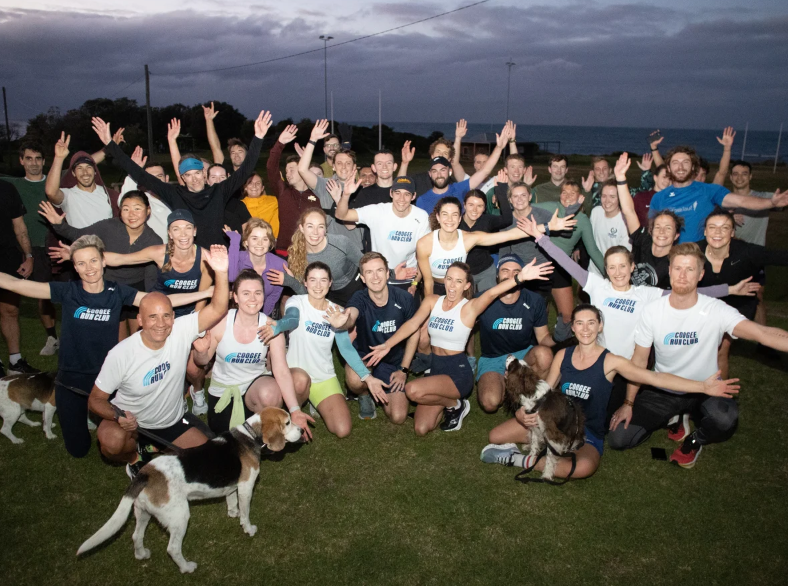
We’ve all felt it: the quiet but seismic cultural shift happening right now. Instead of lining up at bars for Friday night drinks, younger people — especially Gen Z and Millennials — are lacing up trainers and showing up to run clubs, group fitness sessions, and Pilates studios. No alcohol. No dating apps. No thumping playlists. Just movement, real conversation, and genuine community.
This isn’t a fleeting wellness fad. It’s a fundamental behavioural change that’s reshaping how people socialise, what they wear, and where they spend their money. And it’s sending shockwaves through the US$500 billion global athletic footwear and apparel market.
What’s Driving the Shift — And How Is It Changing Socialising and Fashion?
Three big structural forces are at play.
1. Health and wellness have become non-negotiable. Post-COVID, over 60% of younger consumers named health their top priority. Today, around 87% of Gen Z exercise multiple times a week — more than any previous generation. At the same time, alcohol consumption among under-35s has dropped sharply. In the US, participation has fallen from 73% to 62%, with 38% of adults under 35 now abstaining entirely.
Endorphins are winning over ethanol.
2. Socialising has moved from bars to shared activities. Traditional nightlife is being replaced by run clubs, group runs, and fitness communities. Global run club participation has surged 50–60%. A large chunk of Gen Z joins specifically to meet people — and it’s working. Surveys show 1 in 5 respondents have gone on a date with someone they met through a running club. Bank of America data highlights the spending shift: fitness spending among Gen Z is growing ~9%, while bar spending grows less than 4%.
3. What you wear has become identity signalling. Turning up to a run club or studio isn’t just exercise — it’s a statement. It signals discipline, health, performance, and lifestyle. Consumers are embracing “premiumisation with purpose”: they’ll pay more, but only for products that actually perform, align with their values, and fit seamlessly into their routines.
The result? The global athleisure market — already US$400–450 billion — is on track to hit $800 billion to $1 trillion in the next decade, growing at 7–10% CAGR. Fitness has evolved from occasional and solo to habitual, social, and increasingly data-driven.
Why Are Legacy Giants Like Nike Struggling?
Nike still dominates with roughly 25–30% global market share, but it’s visibly losing ground with the very demographic driving growth. The company’s stock has been in steady decline since 2021, revenue growth has slowed to low single digits, margins are under pressure, and market share has slipped in key categories (same-store sales down in Europe and -20% in China).
Three core problems explain it:
Lost focus on performance running. One of the fastest-growing segments globally, running now makes up only 10–15% of Nike’s footwear business. Meanwhile, race participation is exploding: global road race finishers up 17.1% year-on-year in 2024, half-marathon participation up 20.9%, and UK mass events growing 7.8%. Gen Z makes up 38% of 5K participants. Nike simply isn’t capturing enough of this boom.
Distribution missteps. Nike’s aggressive push into direct-to-consumer and retreat from wholesale reduced its presence in specialty running stores — the exact places where credibility with serious runners is built.
Brand perception among younger consumers. Legacy brands increasingly feel “less innovative” at the premium end. Nike optimised for mass marketing and broad distribution in a previous era. The new market rewards authenticity, community connection, and genuine performance.
The Emerging Brands Stealing the Spotlight
While incumbents stumble, nimble challengers are perfectly aligned with the new behaviours.
On Holding (ONON) is the clearest winner. The Swiss brand has built its entire business around performance running, the “wealthy-wellness” demographic, and community — the exact areas where Nike looks increasingly out of touch.
~95% of revenue comes from footwear, led by running.
Footwear sales growing ~33% (constant currency), apparel >75%, accessories 135%.
APAC sales exploding at 106% — the very region where Nike is slipping.
Premium positioning with real pricing power (they absorbed 2024 tariff increases without discounting).
Growth is community-first: run clubs, grassroots adoption, targeted partnerships instead of blanket ads.
The numbers speak for themselves: ~30% revenue growth (guidance 23%), DTC up >30%, gross margins heading toward 63%. On has grown its running market share ~5x in five years — from 1–2% in 2020 to around 10% today — while still trading at a forward P/E of 20x (versus Nike’s 26x) with analysts forecasting 39%+ average EPS growth over the next three years.
Upcoming IPO: Strava
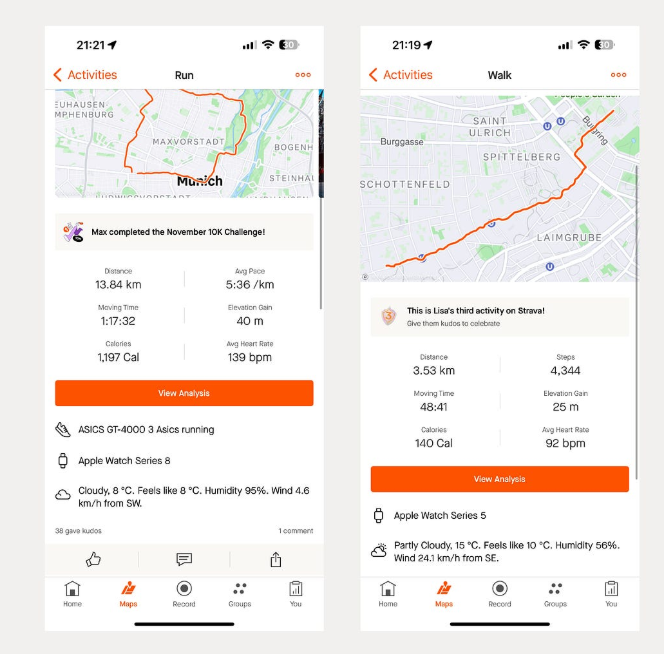
Strava is the digital backbone of the entire movement. The fitness-tracking app (recently filed for IPO, targeting mid-2026) sits at the heart of this new social ecosystem:
~150 million users, 50 million monthly active.
~$500 million ARR run-rate (80–90% subscription).
User growth ~50% YoY, especially among Gen Z.
Freemium model converting to premium subscriptions with strong ARPU ($23–33 blended, ~$80 for payers).
Strava isn’t just a tracker — it’s the social network for fitness. Challenges, segments, kudos, and community features turn solo runs into shared experiences. It’s powering the transition from simple tracking to AI-powered training and coaching, with high retention and powerful network effects.