

September Update
September markets were mixed as higher bond yields and tighter policy weighed on broader risk assets while technology leadership provided relative support. The ASX 200 fell 2.4%, underperforming amid domestic rate sensitivity and softer sentiment. In the US, the S&P 500 declined 0.3%, masking significant dispersion underneath: the tech-heavy Nasdaq 100 rose 1.9% while the small-cap Russell 2000 dropped 5.3%. Style returns followed a similar pattern, with the MSCI World Growth Index down just 0.1% outperforming the Value Index, which fell 2.2%. Overall the month reinforced narrow leadership, as large-cap technology held up while small caps, value, and markets outside the US (including Australia) declined.
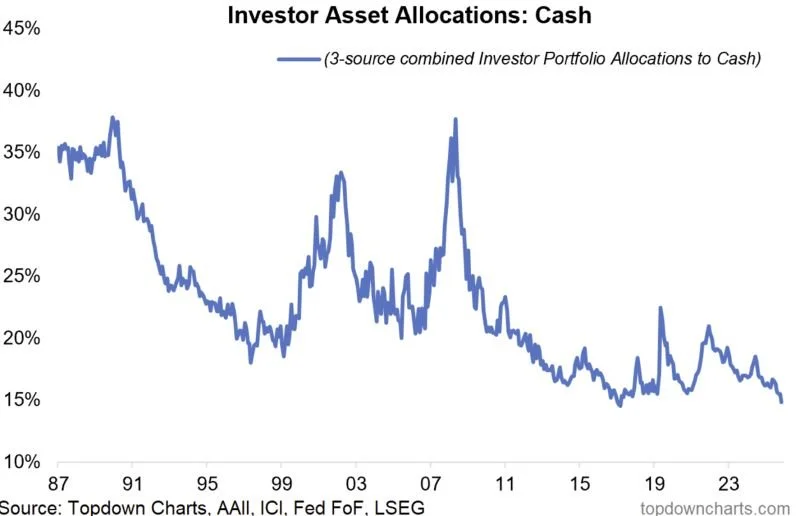
Investor Cash Allocations
Investor allocations to cash sit near multi-decade lows. The combined measure of portfolio cash holdings has continued a long decline from the peaks seen around the global financial crisis and earlier periods of stress. Cash is the most basic form of defense and dry powder; when allocations are this low, it signals that investors have been steadily reducing liquidity and ballast in favour of higher-risk assets. With less cash on the sidelines, there is reduced capacity for incremental buying if markets sell off. Combined with extreme concentration in a handful of large-cap technology names and elevated bond yields, the low cash position leaves portfolios more exposed if leadership stumbles or yields remain higher for longer.
Yields and Central Bank Action
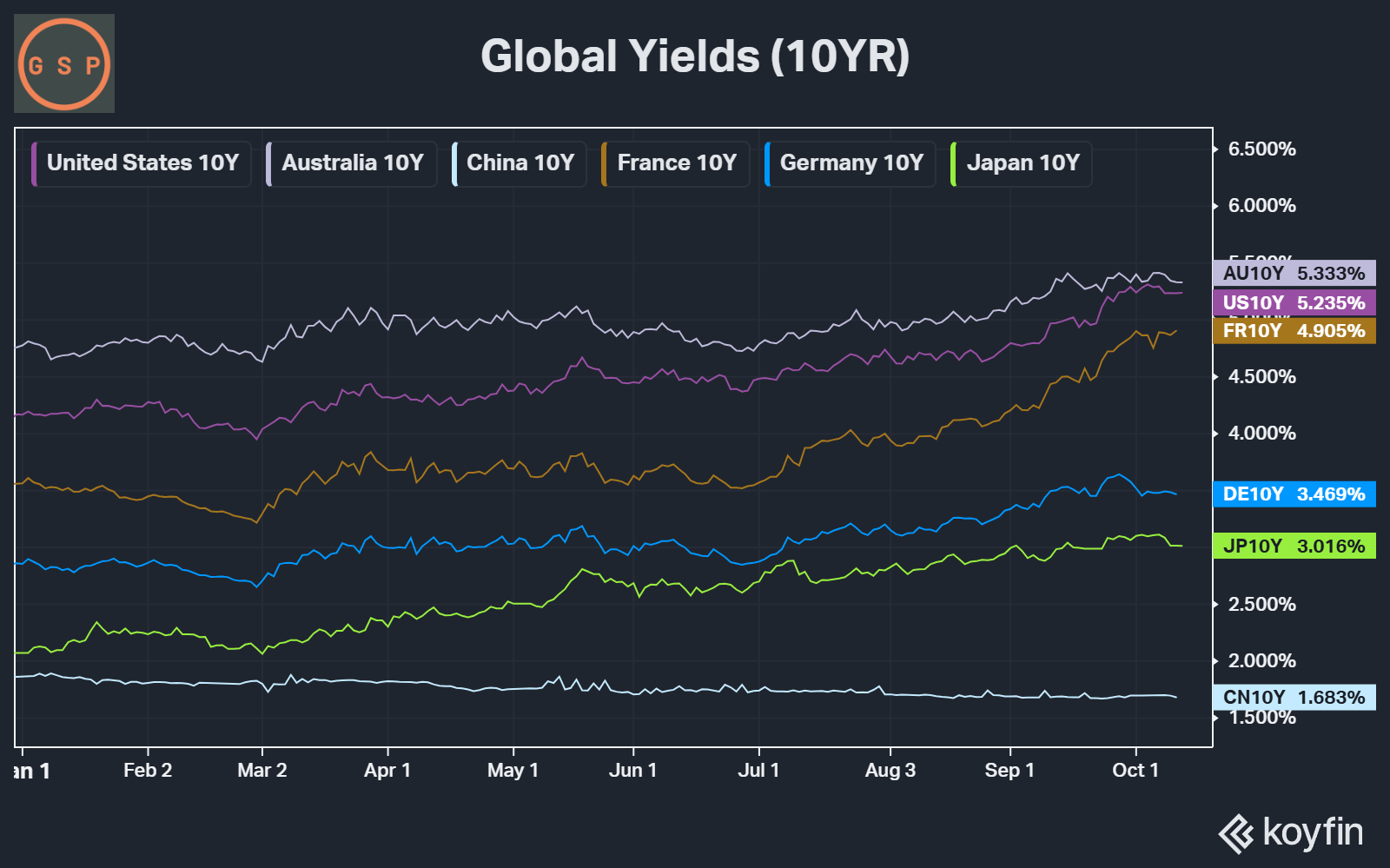
September’s mixed equity returns sat against a clear rise in bond yields and a shift from rate rhetoric to actual tightening. Central banks moved higher: the Fed delivered its first hike since 2023 (to 3.75–4.00%), the RBA raised the cash rate for the fourth time this year to 4.60%, and both the ECB and Bank of Japan also tightened. U.S. 10-year yields climbed toward 5.3%, levels last seen in the mid-2000s, while Australian yields reached multi-year highs above 5.4% mid-month. The move reflected resilient growth, stickier inflation (partly energy-driven), and less accommodative policy. Higher yields restore income appeal and make duration a material portfolio consideration again, but they also raise discount rates and pressure rate-sensitive sectors. That showed up most clearly in small caps, value stocks, and markets such as Australia.
In Europe the yield story had an additional layer. French 10-year yields rose sharply and moved above Greece’s, reversing the hierarchy that defined the post-crisis period. Greece’s relative improvement reflects years of fiscal consolidation and official support; France’s higher yield reflects ongoing concerns about debt trajectory and political capacity to adjust. The crossover is a reminder that markets are now pricing fiscal credibility more finely rather than treating core status as automatic.
AI, Capex, and Concentration
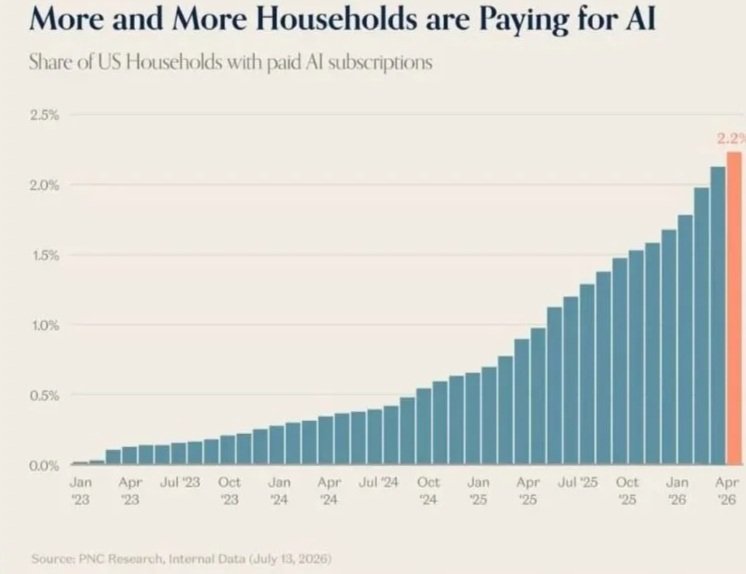
AI-related leadership continued to dominate relative performance. Hyperscalers are deep in an investment cycle, reinvesting a large share of operating cash flow into data centres, power, and compute (over four-fifths on average, with some names above 100%). Operating cash flow has not collapsed, the companies are simply consuming more of it. Free-cash-flow compression is the visible cost of building capacity. Consumer monetisation remains early, only around 2% of U.S. households have a paid AI subscription, so the current spend is still predominantly enterprise- and infrastructure-driven. That leaves runway if adoption scales. Concentration remains extreme as only about 23% of the largest 500 U.S. stocks have beaten the S&P 500 over the past decade. September’s split (Nasdaq 100 higher, broader market and small caps lower) is consistent with that structure. Investor cash allocations near multi-decade lows further reduce dry powder if the narrow leadership stumbles.
Geopolitics and Oil
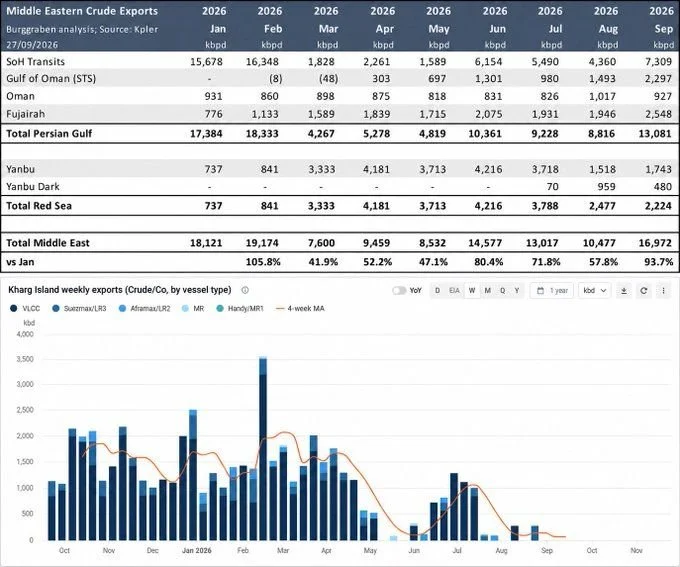
Oil was volatile through September. Brent spiked toward $130 mid-month on Middle East tensions before easing toward $98 by month-end. Non-Iranian Persian Gulf exports largely recovered toward pre-war levels, while Iranian exports fell to near zero. The supply shock narrowed rather than disappeared, leaving a residual risk premium that fed into inflation and bond yields. Refined products stayed elevated due to transport constraints and high refinery utilisation. The conflict is ultimately about oil and inflation. Any escalation that threatens regional supply weighs on bond prices and pushes yields higher, reinforcing the tighter financial conditions already in place. The fascinating thing here is that even though Iran’s oil has effectively been shut down, crude exports from the Persian Gulf for Sep-26 are -25% below that of Jan-26.