

Mini Series: We Can't Scale AI Without Nuclear Energy
Nuclear Isn’t Coming Back. It Never Really Left.
The world simply cannot live without it.
Here’s why.
The Explosive Growth of Data Centers
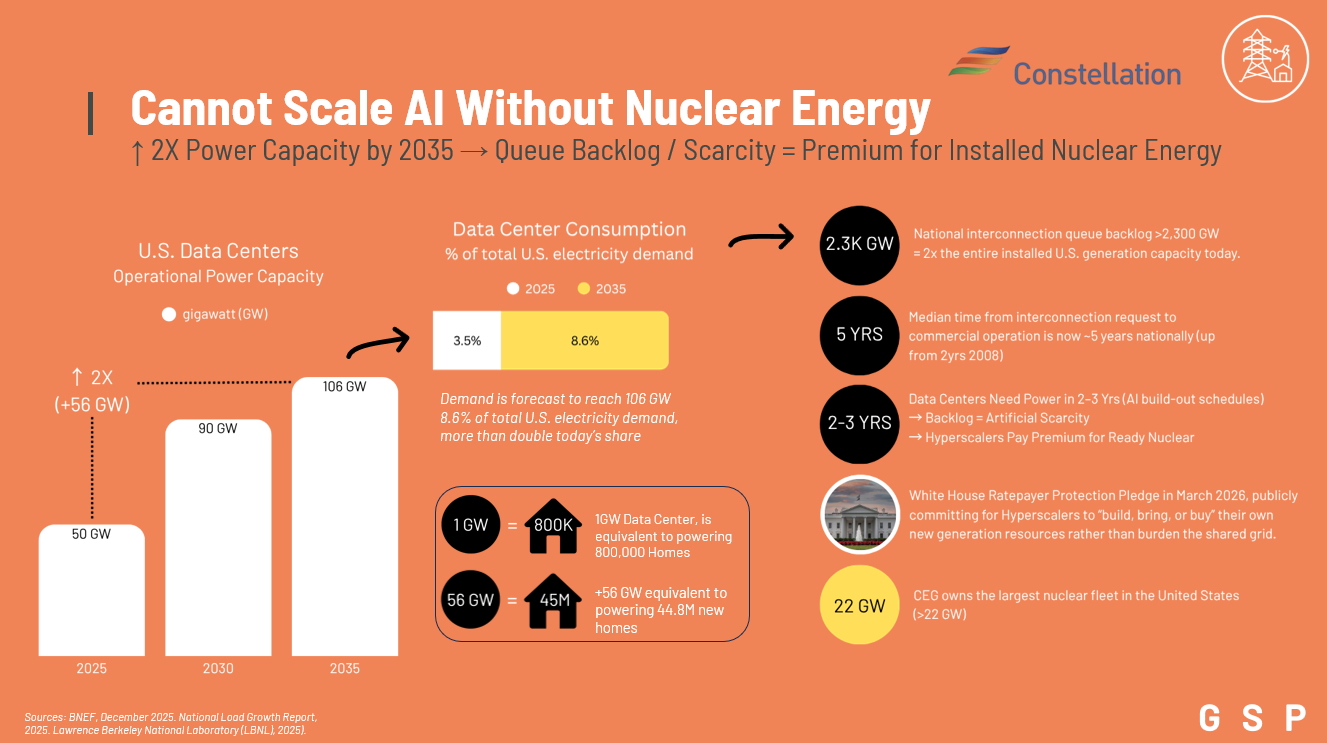
Right now, America’s data centers consume around 50 GW of electricity. By 2035, that number is forecast to surge to 106 GW — more than doubling in just ten years.
To put this in perspective, one gigawatt of data-center demand powers roughly 800,000 homes. The coming 56 GW increase is therefore the equivalent of adding electricity demand for about 45 million new households.
No wonder data centers are projected to jump from 3.5 % of total U.S. power consumption last year to nearly 9 % by 2035. This is one of the fastest-growing energy loads in history.
A Grid in Crisis
The problem is bigger than just demand. The U.S. power grid is paralyzed by a staggering 2,300 GW interconnection backlog — double the size of today’s entire U.S. generation fleet.
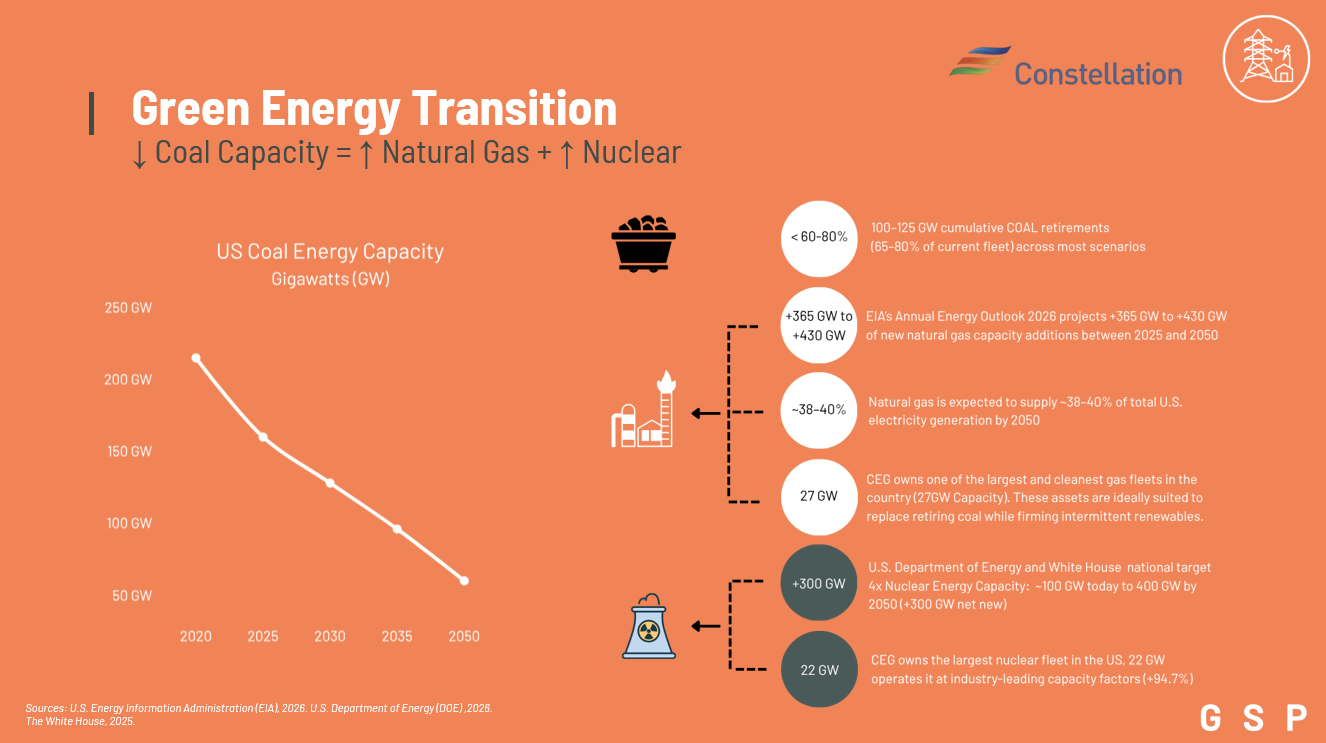
At the same time, coal plants are retiring at breakneck speed. Up to 80 % of U.S. coal capacity could be offline by 2050. Natural gas is stepping in as a bridge fuel and is expected to supply nearly 40 % of U.S. electricity generation by mid-century.
But here’s the catch: the AI industrial revolution and the clean-energy transition both require reliable, around-the-clock, 24/7 power. Nothing delivers that better than nuclear energy.
Why Nuclear Wins
Nuclear plants run at full power 95 % of the time. Natural gas and renewables simply cannot match that level of reliability and capacity factor.
That is exactly why the U.S. Department of Energy and the White House have set an ambitious national goal: quadruple nuclear capacity from today’s roughly 100 GW to 400 GW by 2050.
Constellation Energy: Leading the Nuclear Renaissance
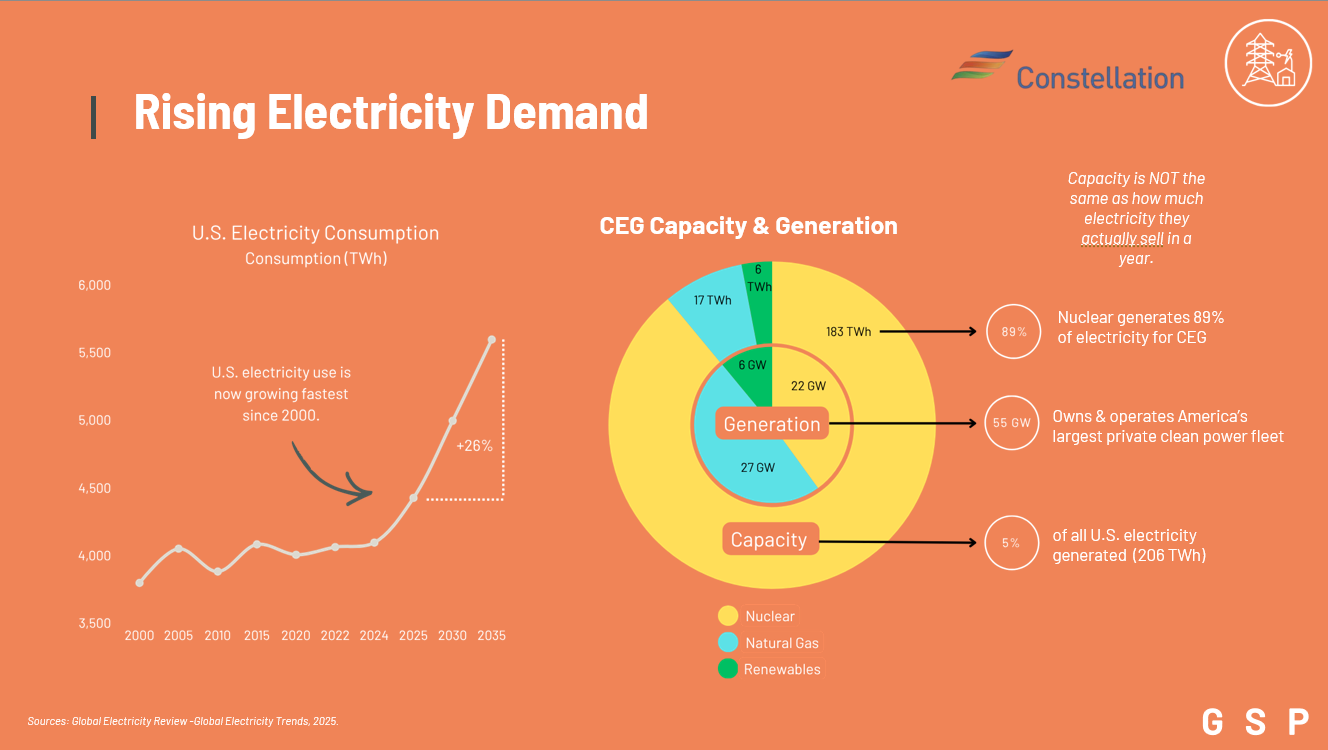
One company is already proving this model works. Constellation Energy operates the largest nuclear fleet in the United States — 22 GW strong — and generates 89 % of its electricity from nuclear, even though it also owns one of the country’s largest natural-gas fleets.
Constellation knows the numbers don’t lie. It is currently restarting the Three Mile Island nuclear plant, now rebranded the Crane Clean Energy Center. Under a landmark 20-year power purchase agreement with Microsoft, the 835-megawatt reactor is scheduled to come back online in late 2027.
Microsoft, Google, Meta, and Amazon are no longer waiting for a broken grid. They are signing deals, planning their own nuclear projects, and securing the always-on power their AI ambitions demand.
The Global Race with China
Meanwhile, China is winning the energy race. It already generates more than double the electricity of the United States, operates 60 reactors, has 36 under construction, and dozens more in the pipeline.
America still has the world’s largest operating nuclear fleet (around 94 reactors), but almost nothing new is being built.
We are in a Space Race, an AI Race, and now an Energy Race with China — and we are falling behind on the one technology that can power all three.
Nuclear isn’t coming back. It never really left.
It is the only proven, scalable, 24/7 carbon-free source that can meet the explosive demand of the AI era while supporting a cleaner energy future.
The question is no longer if nuclear will play a central role. The question is whether the United States will lead — or fall further behind.