

July Update
July was a challenging month for equity markets, particularly growth and technology-heavy strategies. The Nasdaq 100 fell around -6.6%, as a sharp rotation out of crowded AI infrastructure and semiconductor positions dominated price action. This sharp rotation saw many growth-oriented funds experience sharp drawdowns for the month with some in excess of -10% while our strategies outperformed on a relative basis both the broader index and peers, the fund declining -2.5%and GSP Global Growth Managed Portfolio -3.18%. This relative outperformance on the downside was driven by sector allocation and stock selection, rather than any major defensive shift. After a difficult year relative to some more concentrated peers, the month represented meaningful catch-up as we saw Software continue its recovery post SaaSpocalypse. Microsoft in particular recovered strongly late in the month on solid cloud results, helping to stabilise the broader group. Quality software names with clear AI monetisation pathways (including ServiceNow) demonstrated more resilience than the pure hardware and semiconductor cohorts. The US dollar depreciated ~2% for the month adding to returns for those actively hedging AUD/USD currency risk.
Semiconductors
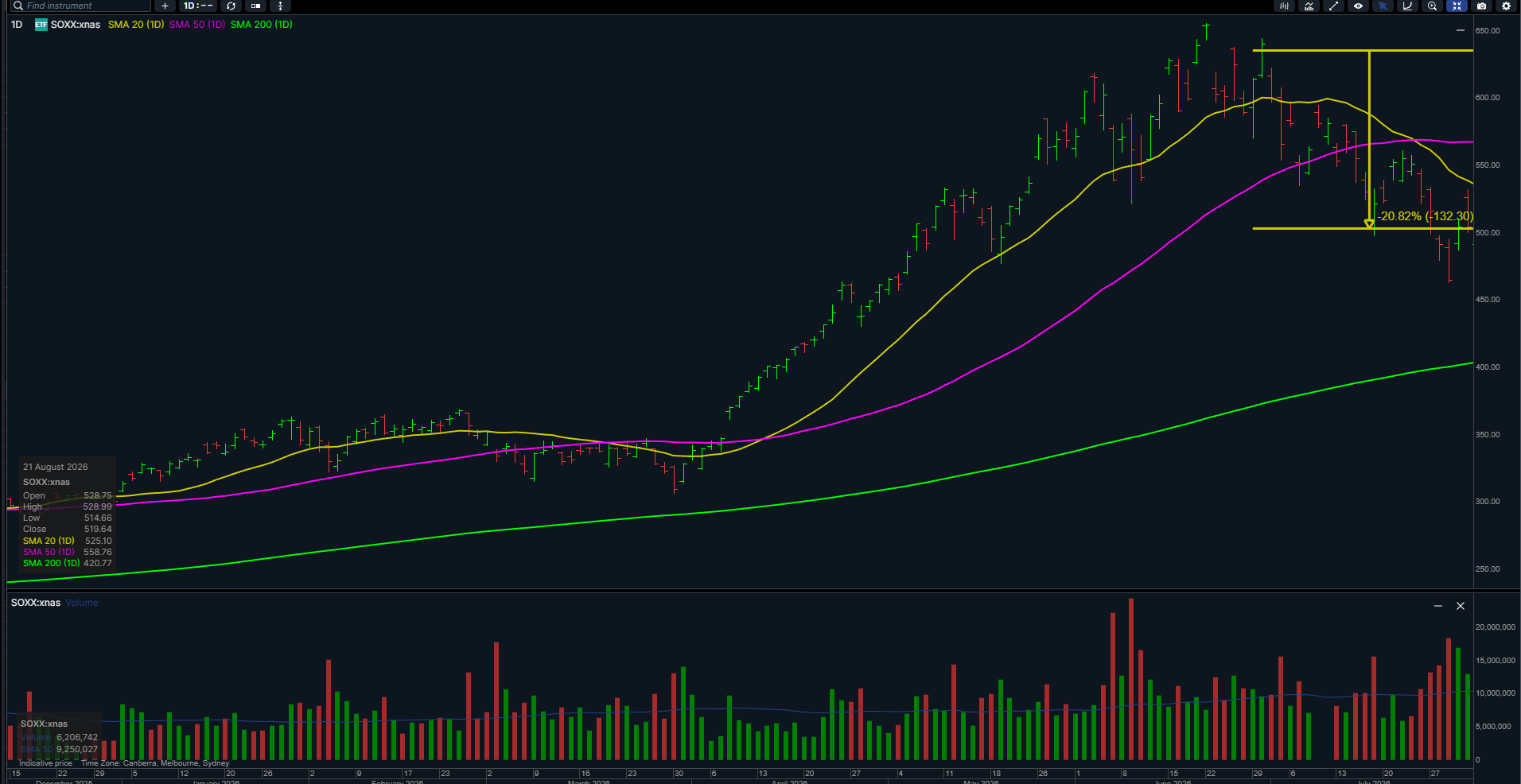
The July semiconductor sell-off was less about a deterioration in AI demand and more about a reassessment of the returns available from the AI infrastructure cycle. After an extraordinary period of earnings upgrades and multiple expansion, investors began questioning whether accelerating capital expenditure by hyperscalers can continue to support the valuation premiums embedded across the semiconductor complex. The correction was particularly pronounced in memory and other second-order AI beneficiaries, highlighting the difference between strong underlying industry demand and attractive equity valuations. Names such as NVIDIA, AMD, ASML, TSMC and Arm were caught in a broad de-rating as investors questioned near-term returns on AI capital expenditure and unwound leveraged positions. The Philadelphia Semiconductor Index fell more than 20% over the peak-to-trough move. Our exposure was more selective and lower beta than many pure-play semiconductor strategies, which helped limit the damage. Several key points caused this reversal
Valuation had become extreme
Market questioning the AI capex return equation
China is becoming a much bigger issue
Memory supply is tight and the market shifted from fundamental scarcity to pricing future supply and earnings expectations
We view the correction as healthy for the sector rather than evidence that the AI investment cycle is over. The next phase is likely to favour companies with genuine technological differentiation, pricing power and exposure to sustained AI compute demand, rather than simply companies benefiting from indiscriminate semiconductor capex. In our view, the sell-off is therefore creating a more attractive environment for stock selection within the semiconductor ecosystem
Earnings Remain the Fundamental Support
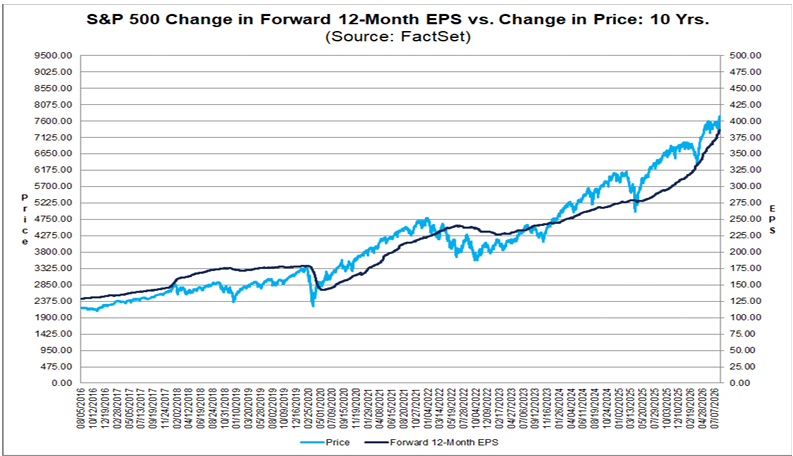
Importantly, corporate earnings have so far provided a strong counterbalance to the macro risks. The second-quarter earnings season has been exceptionally strong, with blended S&P 500 earnings growth rate for the Q2 at 47.4% for companies reporting up to July 31. Technology has been a major contributor, but earnings growth has broadened beyond the largest technology companies. Excluding significant investment gains at companies such as Alphabet and Amazon, aggregate earnings growth has still been around 33%. This is important because it suggests the market's fundamental backdrop remains considerably stronger than the price action during July might imply. The question for the next phase of the cycle is therefore less about whether earnings are growing and more about how much of that growth is already reflected in valuation.
Three key Themes emerging from July
Market breadth is improving.
The outperformance of equal-weight equities and value stocks suggests the rally is becoming less dependent on a small group of mega-cap technology companies. This is constructive for the broader market and potentially extends the duration of the bull market.
AI is moving from investment to monetisation.
The market is becoming increasingly selective. Companies simply spending aggressively on AI are no longer guaranteed to be rewarded. Investors are increasingly looking for measurable revenue growth, margin expansion and free cash flow returns from AI investment.
Rates remain the key valuation risk
The long end of the Treasury curve deserves close attention. If 10- and 30-year yields continue to rise, the pressure on high-duration equities could persist even if corporate earnings remain strong.
For growth investors, we believe this environment favours quality over beta; companies with durable structural growth, high incremental margins, strong balance sheets and demonstrable evidence that AI is expanding their addressable markets rather than simply increasing their cost base.
Looking ahead August and September are likely to remain focused on the interaction between earnings, inflation and interest rates. The market enters the second half of the year with strong earnings momentum but significantly higher expectations. The challenge for investors is that the macro environment is becoming less forgiving: inflation remains above target, employment is slowing, long-duration bond yields are elevated and geopolitical risks continue to influence energy prices. Against this backdrop, we remain constructive on US equities but increasingly selective. The opportunity, in our view, is identify the companies where structural earnings growth is strong enough to overcome valuation, rates and increasing competition.
Software Recovery in Full Swing? Maybe
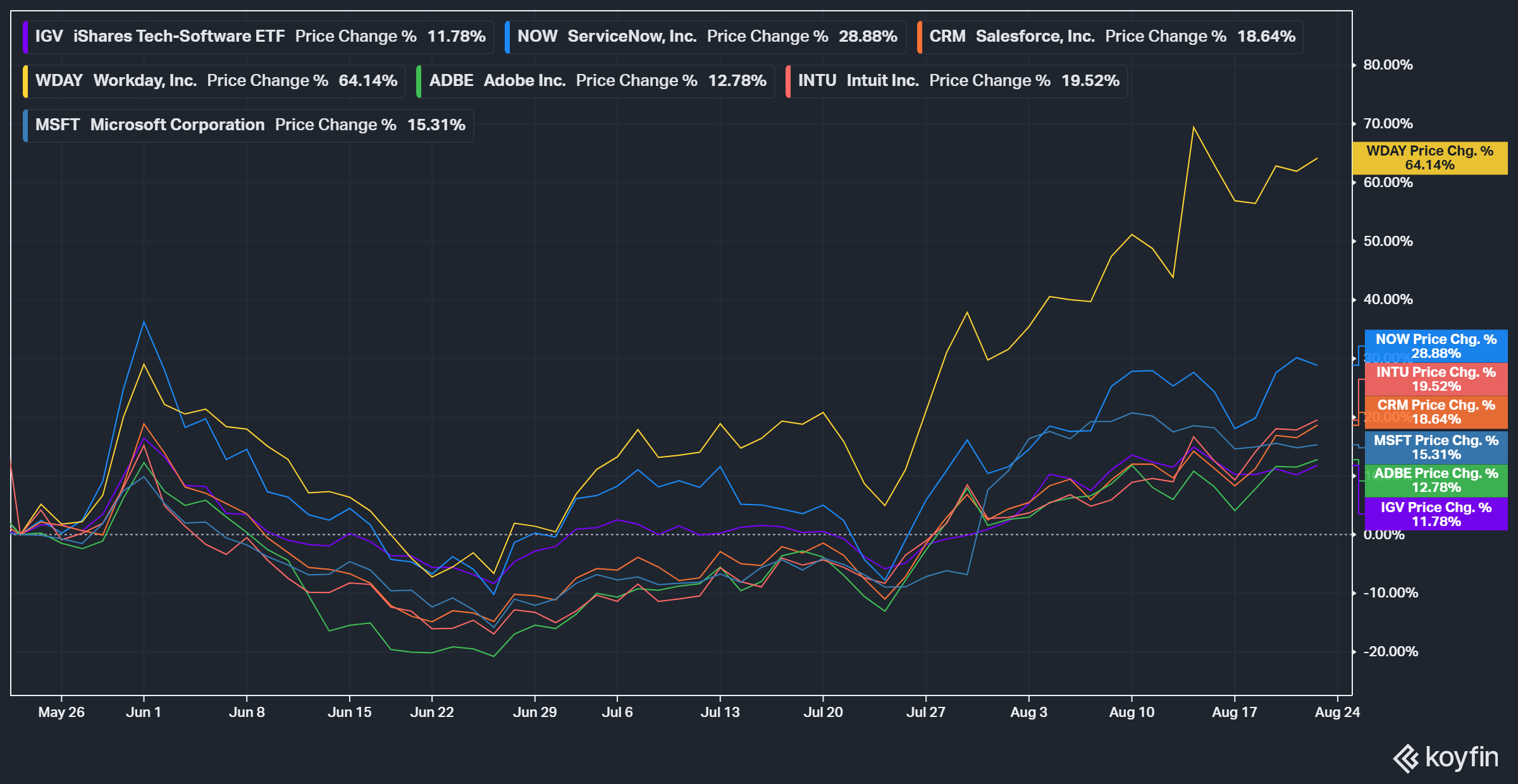
After being one of the biggest casualties of the early-2026 “SaaSpocalypse”, software stocks staged a meaningful recovery in July. The iShares Expanded Tech-Software ETF (IGV) gained 4.4%, following a 10.7% decline in June. The rebound was particularly strong across previously heavily sold-off names: Workday rose roughly 31%, Adobe 22%, Intuit 22%, Autodesk 20% and Salesforce 18%. Microsoft was up 24.6%. The more important development, however, was the change in the market narrative. Earlier in the year, investors had increasingly viewed AI as a direct threat to incumbent software companies, particularly those reliant on seat-based pricing and relatively narrow functionality. By July, that concern began to give way to a more nuanced view: AI may ultimately strengthen the platforms with proprietary data, embedded workflows and large enterprise customer bases. The rotation was particularly visible on July 27, when software stocks rallied sharply even as semiconductor stocks sold off. Workday gained 9.3%, Salesforce 6.8% and Intuit 3.4%, while the IGV rose around 4% compared with a 3.1% decline in the semiconductor ETF.
Importantly, the recovery reflects more than simple bargain hunting. Investor concerns are beginning to shift from “Will AI destroy software?” to “Which software companies will monetise AI?” Strong cloud growth from Microsoft, Amazon and Google is providing evidence that AI investment is driving incremental demand for enterprise technology, while established software platforms retain significant advantages through proprietary data, embedded workflows and distribution. We believe this distinction is critical. AI is likely to disrupt portions of the software market, but it may simultaneously increase the strategic value of scaled platforms that can embed AI into mission-critical workflows. Following the substantial de-rating earlier in the year, July's recovery suggests the market is beginning to differentiate between software businesses genuinely vulnerable to AI substitution and those positioned to benefit from it.